Malaysian food does not come from one tradition. It is Malay, Chinese, Indian and Nyonya (Peranakan) cooking that developed side by side for generations, borrowing techniques and ingredients from each other along the way. That is why Malaysian food is so varied: a single trip can serve you a coconut-rice breakfast, a slow-cooked beef curry with Indonesian roots, a noodle dish invented by Chinese immigrants, and a fusion cuisine that belongs to neither culture alone. This guide covers the Malaysian dishes every first-time visitor should know before landing, with pointers to where we go deeper on each.
Top Malaysian Dishes at a Glance: Malaysian Food Table
| Dish | Tradition and region | Type | Main ingredients | Spice level |
|---|---|---|---|---|
| Nasi lemak | Malay, nationwide | Rice dish | Coconut rice, sambal, anchovies, peanuts, egg | Mild to hot |
| Rendang | Malay, from Minangkabau cooking | Dry curry | Beef, coconut milk, lemongrass, galangal, chili | Medium to hot |
| Satay | Malay, famous in Kajang | Grilled skewers | Chicken, beef or mutton, peanut sauce | Mild |
| Assam laksa | Penang | Noodle soup | Tamarind, fish, thick rice noodles | Medium, sour |
| Curry laksa | Kuala Lumpur and the south | Noodle soup | Coconut curry broth, noodles | Medium |
| Sarawak laksa | Sarawak, Borneo | Noodle soup | Spice paste broth, prawns, noodles | Medium |
| Roti canai | Mamak (Indian-Muslim), nationwide | Flatbread | Flaky bread with curry or dhal | Mild |
| Char kway teow | Chinese-Malaysian, Penang | Stir-fried noodles | Flat rice noodles, prawns, egg, sausage | Mild to medium |
| Hokkien mee | Chinese-Malaysian, KL and Penang | Noodles | KL: dark fried noodles. Penang: prawn broth | Mild to medium |
| Bak kut teh | Chinese-Malaysian, associated with Klang | Soup | Pork ribs, herbs and spices, garlic | Mild |
| Nyonya dishes | Peranakan, Malacca and Penang | Fusion cuisine | Tamarind, galangal, candlenut, coconut | Medium |
| Cendol | Nationwide | Dessert | Shaved ice, coconut milk, pandan jelly, palm sugar | None |
Spice levels vary by cook and by stall, so treat the last column as a rough guide and ask for sambal on the side if you are unsure.
What Is Malaysia’s National Dish?
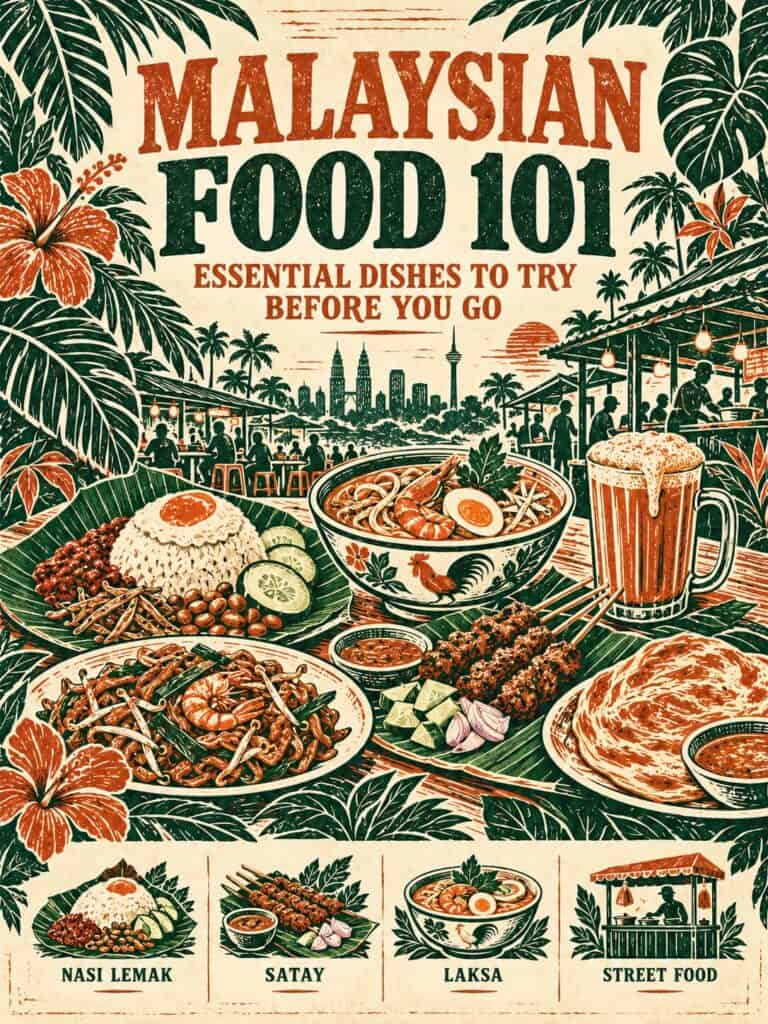
Nasi lemak is the Malaysian food most widely treated as the national dish, although there is no single official title. It is a plate of rice cooked in coconut milk and pandan leaf, served with sambal, fried anchovies, roasted peanuts, cucumber and an egg, and you will find it at breakfast stalls and restaurants across the country.
Nasi Lemak: The Dish That Represents the Country
Nasi lemak is rice cooked in coconut milk and pandan leaf, served with sambal (a chili paste that ranges from mild to fiery), fried anchovies, roasted peanuts, cucumber slices and a boiled or fried egg. It started as a breakfast dish wrapped in banana leaf and sold from roadside stalls, but Malaysians now eat it at any time of day. The banana-leaf version (nasi lemak bungkus) from a street stall is a very different experience from the restaurant plates that add fried chicken, rendang or squid sambal on the side.
Rendang: A Slow-Cooked Curry for Special Occasions
Rendang is a dry, deeply spiced meat curry, most commonly beef, simmered for hours in coconut milk and a paste of lemongrass, galangal, turmeric and chilies until the liquid reduces and the meat turns dark and tender. It has roots in Minangkabau cooking from Sumatra but is now firmly part of Malaysian festive food, especially during Hari Raya (Eid). Because of the long cooking time, this Malaysian food is less of an everyday hawker dish and more something you will find at Malay restaurants, nasi kandar counters or during festival season.
Satay: Grilled Skewers, and Kajang’s Claim to Fame
Satay is skewered, marinated meat (chicken, beef or mutton) grilled over charcoal and served with a thick peanut sauce, cucumber and compressed rice cakes (ketupat). Satay is Malaysian food at its most familiar. It is sold everywhere from hawker stalls to sit-down restaurants, but the town of Kajang, just south of Kuala Lumpur, is known as Malaysia’s satay capital, with whole streets of competing satay restaurants.
Laksa: One Name, Several Completely Different Bowls
“Laksa” covers several distinct dishes depending on where you order it, which trips up many first-time visitors. Penang’s assam laksa is a sour, tamarind-and-fish broth with thick rice noodles, and our Penang street food guide shows where to find it. Curry laksa, common in Kuala Lumpur and further south, is a coconut-curry noodle soup closer to what most visitors expect from the name. Sarawak laksa, from Borneo, uses its own spice paste and is often eaten for breakfast; see our Kuching and Sarawak guide for the region. If a menu just says “laksa”, ask which style you are getting.
Roti Canai and Teh Tarik: Mamak Food Culture
Roti canai is a flaky, pan-fried flatbread served with a small bowl of curry or dhal for dipping. It comes from Malaysia’s Indian-Muslim (mamak) community and is sold at mamak stalls and restaurants around the clock, often 24 hours. Variants stuffed with egg (roti telur) or banana are common. The classic drink pairing is teh tarik, “pulled tea”: strong black tea with condensed milk, poured back and forth between two cups to create a frothy top. Mamak restaurants also serve roti canai’s cousins, such as murtabak (a stuffed, folded version with meat and egg) and thosai.
Chinese-Malaysian Food: Char Kway Teow, Hokkien Mee and Bak Kut Teh
Chinese immigration brought a wave of noodle and soup dishes that have become distinctly Malaysian. Char kway teow is a stir-fry of flat rice noodles with prawns, egg and Chinese sausage, and some versions use cockles. Hokkien mee exists in two very different regional versions under the same name: Penang’s Hokkien mee is a spicy prawn-broth noodle soup, while Kuala Lumpur’s is a dark, soy-fried noodle dish. Our guide to Kuala Lumpur hawker centers and night markets covers where to try the KL version, and the Ipoh area is also known for its food in our Ipoh guide. Bak kut teh, a herbal pork rib soup simmered for hours, is strongly associated with the town of Klang near KL.
Nyonya Cuisine: A Fusion Within Malaysian Food
Peranakan (Nyonya) cuisine developed among the descendants of early Chinese immigrants who settled in Malacca, Penang and Singapore and married into local Malay communities, blending Chinese techniques with Malay and Indonesian spices and ingredients such as tamarind, galangal and candlenut. It is distinct enough from both parent cuisines to deserve its own guide: see our guide to Nyonya cuisine in Malacca and Penang for specific restaurants and dishes, and the Malacca guide for the city.
Malaysian Desserts and Drinks
- Cendol: shaved ice with coconut milk, green pandan-flavored jelly and palm sugar syrup.
- Ais kacang: a mound of shaved ice with red beans, sweet corn and colorful syrups, sometimes with ice cream.
- Kuih: bite-sized sweet or savory cakes, often steamed, made from rice flour, coconut and palm sugar and sold at markets and breakfast stalls.
- Teh tarik: the national “pulled tea” with condensed milk, found at mamak stalls.
- Kopi and white coffee: strong local coffee, often with condensed milk, with Ipoh known for its white coffee.
Halal, Vegetarian and Allergen Notes for Malaysian Food
Malaysia’s food scene splits fairly clearly along ethnic and religious lines. Malay and mamak (Indian-Muslim) food is generally halal, while many Chinese-run hawker stalls, including those serving char kway teow, Hokkien mee and bak kut teh, are not, since they often use pork or lard. Nyonya food varies by restaurant. Look for a halal certificate on display, and confirm per stall if it matters to you. See our halal food and Muslim-friendly travel guide for practical advice.
- Vegetarian and vegan: options exist but need care. Sambal often contains dried shrimp paste (belacan) and anchovies, and broths may be made with meat or fish. Roti canai with dhal, vegetable dishes, Indian vegetarian restaurants and Buddhist vegetarian eateries are the easiest choices.
- Peanuts: found in satay sauce and nasi lemak, so tell the vendor if you have an allergy.
- Shrimp and shellfish: common in laksa, sambal and char kway teow, so ask before ordering.
- No guarantees: stalls rarely list ingredients and cross-contact is common, so confirm directly and avoid relying on any single label.
Practical Tips for Eating Malaysian Food
- Ask which “laksa” you are getting. The name covers genuinely different dishes by region.
- Carry cash for hawker stalls. Many stalls do not take cards, even in bigger cities.
- Try the regional version. Penang’s Hokkien mee and KL’s are both worth trying because they are so different.
- Go where the queue is. A busy stall usually means fresh food and quick turnover.
Frequently Asked Questions About Malaysian Food
What is Malaysia’s national dish?
Nasi lemak is the dish most widely treated as Malaysia’s national dish: coconut rice with sambal, anchovies, peanuts and egg, eaten at any time of day.
What are the best Malaysian foods to try first?
Start with nasi lemak, satay, roti canai and a bowl of laksa, then add a regional noodle dish and a Nyonya meal.
Is Malaysian food spicy?
It varies. Many dishes can be mild, while sambal and some curries are hot. You can often ask for sambal on the side.
Is Malaysian food generally halal?
Much of it is, particularly Malay and mamak food, but a significant share of Chinese-run hawker food is not, since it often includes pork or lard. Check per dish and per stall.
Why do different places serve completely different laksa?
Laksa is a regional name covering several distinct dishes: Penang’s sour assam laksa, the coconut-based curry laksa and Sarawak’s spice-paste version are different bowls that share one name.
What is the difference between Penang and Kuala Lumpur Hokkien mee?
In Penang it is a prawn-broth noodle soup, while in Kuala Lumpur it is a dark, soy-fried noodle dish.
Where is the best satay in Malaysia?
Kajang, just south of Kuala Lumpur, is known as Malaysia’s satay capital, with streets built around competing satay restaurants.
Can vegetarians eat well in Malaysia?
Yes, with some care. Look for Indian vegetarian restaurants, roti canai with dhal and Buddhist vegetarian eateries, and ask whether sambal and broths contain shrimp paste or meat.
What are Malaysian desserts?
Popular ones include cendol, ais kacang and kuih, plus teh tarik as a drink.
Bottom Line
Malaysian food is really several food identities layered together, and the best way to experience it is to seek out the regional and cultural variations rather than settle for the first version you find. Start with nasi lemak and satay, branch into the regional laksas and noodle dishes, and set aside a meal or two for Nyonya cuisine, which is unlike anything else on this list.
Pingback: Kuala Lumpur's Best Hawker Centers and Night Markets
Pingback: Penang Street Food Guide: What to Eat and Where